---
title: NetWorks Group Blog | Healthcare
description: Healthcare | Managed Detection & Response Service, Ethical Hacking Service
---
- info@networksgroup.com
- [Contact Us](https://www.networksgroup.com/contact/)
-
-
-
- [mailto:info@networksgroup.com](mailto:info@networksgroup.com)
[  ](https://www.networksgroup.com/)
- [Home](https://www.networksgroup.com/)
- Detect & Respond
- [Managed Detection & Response](https://www.networksgroup.com/managed-detection-response/)
- [Endpoint Managed Detection & Response](https://www.networksgroup.com/managed-detection-response/endpoint-mdr/)
- Ethical Hacking
- [Full Scope Penetration Test](https://www.networksgroup.com/full-scope-penetration-test/)
- [Web Application Security Test](https://www.networksgroup.com/web-application-security-test/)
- Security Services
- [Managed Security Infrastructure](https://www.networksgroup.com/managed-security-services/)
- [Compliance Services](https://www.networksgroup.com/pci/)
- [Vulnerability Management](https://www.networksgroup.com/vulnerability-management/)
- [Security Architecture Review](https://www.networksgroup.com/security-architecture-review/)
- Resources
- [Blog](http://blog.networksgroup.com/)
- [Library](https://www.networksgroup.com/library/)
- Company
- [About](https://www.networksgroup.com/about/)
- [Contact Us](https://www.networksgroup.com/contact/)
- [Careers](https://www.networksgroup.com/careers/)
- [Partners](https://www.networksgroup.com/partners/)
[](https://www.networksgroup.com/)
- [Home](https://www.networksgroup.com/)
- Detect & Respond
- [Managed Detection & Response](https://www.networksgroup.com/managed-detection-response/)
- [Endpoint Managed Detection & Response](https://www.networksgroup.com/managed-detection-response/endpoint-mdr/)
- Ethical Hacking
- [Full Scope Penetration Test](https://www.networksgroup.com/full-scope-penetration-test/)
- [Web Application Security Test](https://www.networksgroup.com/web-application-security-test/)
- Security Services
- [Managed Security Infrastructure](https://www.networksgroup.com/managed-security-services/)
- [Compliance Services](https://www.networksgroup.com/pci/)
- [Vulnerability Management](https://www.networksgroup.com/vulnerability-management/)
- [Security Architecture Review](https://www.networksgroup.com/security-architecture-review/)
- Resources
- [Blog](http://blog.networksgroup.com/)
- [Library](https://www.networksgroup.com/library/)
- Company
- [About](https://www.networksgroup.com/about/)
- [Contact Us](https://www.networksgroup.com/contact/)
- [Careers](https://www.networksgroup.com/careers/)
- [Partners](https://www.networksgroup.com/partners/)
# NetWorks Group Blog
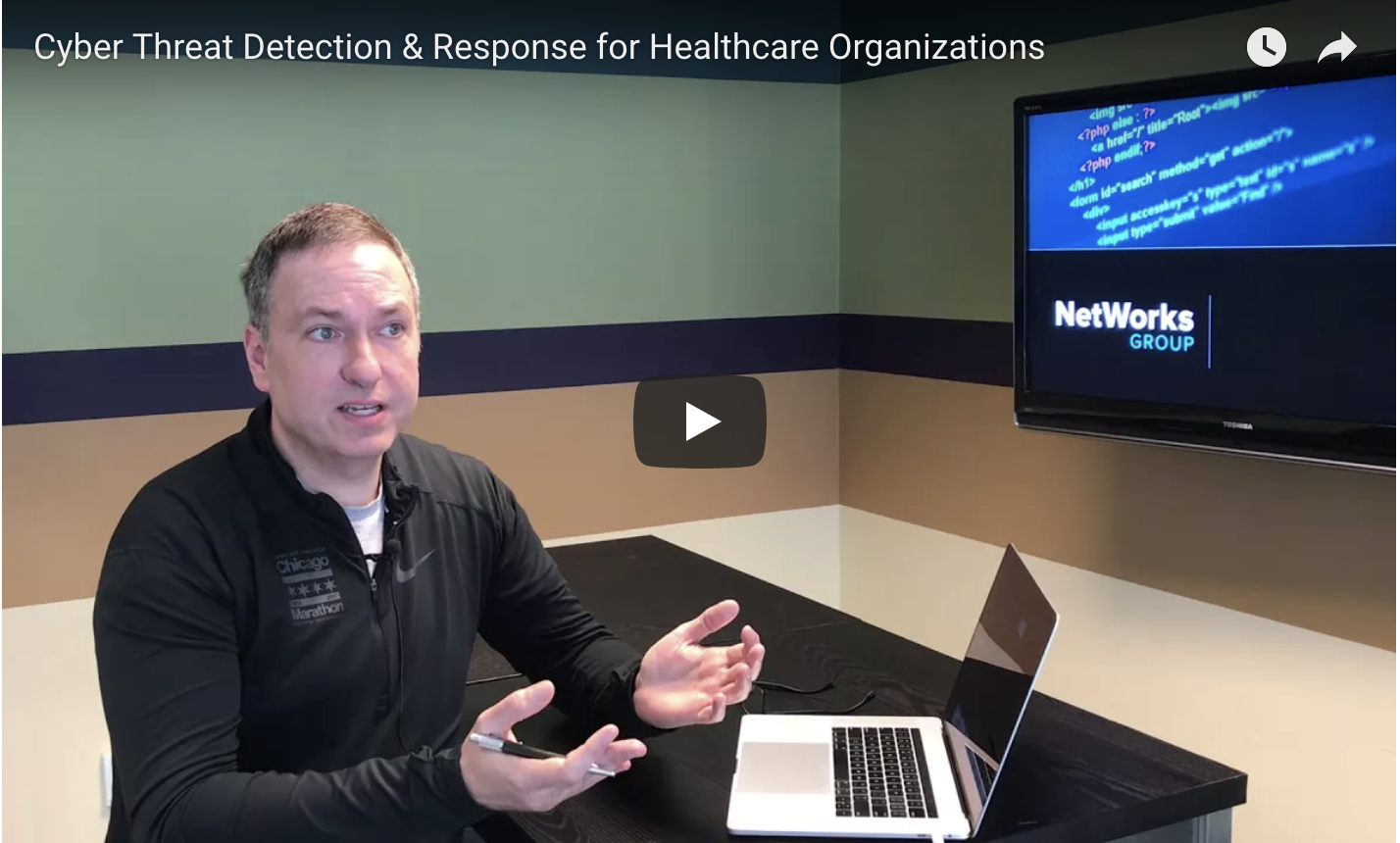
## [Security Threat Detection & Response for Healthcare Organizations](https://email.networksgroup.com/cyber-threat-detection-response-for-healthcare-organizations)
Posted by [David Howard](https://email.networksgroup.com/author/david-howard) on Mar 20, 2018 11:36:51 AM
- [Tweet](https://twitter.com/share)
[](https://email.networksgroup.com/cyber-threat-detection-response-for-healthcare-organizations)
Why should Healthcare organizations should care about [Managed Threat Detection & Response](https://www.networksgroup.com/managed-detection-response/)?
[Read More](https://email.networksgroup.com/cyber-threat-detection-response-for-healthcare-organizations)
0 Comments [Click here to read/write comments](https://email.networksgroup.com/cyber-threat-detection-response-for-healthcare-organizations#comments-listing)
Topics: [Managed Detection & Response](https://email.networksgroup.com/topic/managed-detection-response), [Healthcare](https://email.networksgroup.com/topic/healthcare)
## [HIPAA vs Security: Building security into medical purchasing decisions](https://email.networksgroup.com/hipaa-vs-security)
Posted by [Amanda Berlin](https://email.networksgroup.com/author/amanda-berlin) on Jan 23, 2018 10:37:00 AM
- [Tweet](https://twitter.com/share)
[](https://email.networksgroup.com/hipaa-vs-security)
What the security community says about a specific industry vertical usually holds true for a good percentage of what is seen in the wild. You can ask any hacker, defender, CISO, etc what industries struggle the most and there are common themes in their answers. Top of the list includes healthcare, manufacturing, government, and financial. Some of the most heavily compliance controlled and regulated are also some of the least secure. Why is this? Is it due to administrators and senior management taking compliance standards as gospel? Maybe it’s a lack of knowledgeable staff like the blind leading the blind.
[Read More](https://email.networksgroup.com/hipaa-vs-security)
0 Comments [Click here to read/write comments](https://email.networksgroup.com/hipaa-vs-security#comments-listing)
Topics: [Information Security](https://email.networksgroup.com/topic/information-security), [Compliance](https://email.networksgroup.com/topic/compliance), [Healthcare](https://email.networksgroup.com/topic/healthcare), [HIPAA](https://email.networksgroup.com/topic/hipaa)
## [HIPAA Covered Entity: Know How to Respond to a Cyber Security Incident](https://email.networksgroup.com/hipaa-covered-entity-know-how-to-respond-to-a-cyber-security-incident)
Posted by [Jyothish Varma](https://email.networksgroup.com/author/jyothish-varma) on Jan 18, 2018 9:33:59 AM
- [Tweet](https://twitter.com/share)
[](https://email.networksgroup.com/hipaa-covered-entity-know-how-to-respond-to-a-cyber-security-incident)
# Know How to Respond to a Cyber Security Incident
Organizations that fall under the purview of HIPAA have to respond quickly to a cyber attack. The Office for Civil Rights (OCR) under the U.S. Department of Health and Human Services (HHS) issued a step-by-step guide to aid organizations. As a covered entity, your [organization must have a contingency plan and incident procedures](https://tax.thomsonreuters.com/checkpoint-ebia-newsletter/ocr-releases-checklist-identifying-steps-to-take-under-hipaa-immediately-after-cyber-attack/) in the event of a security breach.
[Read More](https://email.networksgroup.com/hipaa-covered-entity-know-how-to-respond-to-a-cyber-security-incident)
0 Comments [Click here to read/write comments](https://email.networksgroup.com/hipaa-covered-entity-know-how-to-respond-to-a-cyber-security-incident#comments-listing)
Topics: [Information Security](https://email.networksgroup.com/topic/information-security), [Incident Response](https://email.networksgroup.com/topic/incident-response), [Threat Management](https://email.networksgroup.com/topic/threat-management), [Healthcare](https://email.networksgroup.com/topic/healthcare), [HIPAA](https://email.networksgroup.com/topic/hipaa)
## [Understanding OCR Guidance on Ransomware](https://email.networksgroup.com/understanding-ocr-guidance-on-ransomware)
Posted by [Jyothish Varma](https://email.networksgroup.com/author/jyothish-varma) on Dec 27, 2017 10:11:00 AM
- [Tweet](https://twitter.com/share)
[](https://email.networksgroup.com/understanding-ocr-guidance-on-ransomware)
# Understanding OCR Guidance on Ransomware
With the prevalence of data breaches, ransomware has also come to the forefront of security threats. This [malicious software](https://blog.networksgroup.com/what-is-ransomware-and-what-can-you-do-to-keep-your-systems-secure) is created by hackers who encrypt data and hold it hostage. Users are denied access to this data until they pay a ransom to the hacker.
[Read More](https://email.networksgroup.com/understanding-ocr-guidance-on-ransomware)
0 Comments [Click here to read/write comments](https://email.networksgroup.com/understanding-ocr-guidance-on-ransomware#comments-listing)
Topics: [Managed Detection & Response](https://email.networksgroup.com/topic/managed-detection-response), [Information Security](https://email.networksgroup.com/topic/information-security), [Threat Management](https://email.networksgroup.com/topic/threat-management), [Healthcare](https://email.networksgroup.com/topic/healthcare), [HIPAA](https://email.networksgroup.com/topic/hipaa)
## [The Impact of Cybersecurity Breaches in the Healthcare Industry](https://email.networksgroup.com/the-impact-of-cybersecurity-breaches-in-the-healthcare-industry)
Posted by [Jyothish Varma](https://email.networksgroup.com/author/jyothish-varma) on Dec 14, 2017 10:16:05 AM
- [Tweet](https://twitter.com/share)
[](https://email.networksgroup.com/the-impact-of-cybersecurity-breaches-in-the-healthcare-industry)
Cybersecurity breaches reached unprecedented levels in 2017. Few were spared as businesses and government entities alike -- including Equifax, the British National Health Service and even the U.S. National Security Agency, as well as dozens of others -- were hit with data breaches. While frequent targets like the financial sector and retail industries experienced their fair share of attacks, the healthcare sector is now the primary target of hackers, [accounting for 25 percent of all data breaches](http://storage.pardot.com/51442/176077/breach_level_index_infographic_h1_2017_gemalto_inforgraphic.jpg). Understanding why this is happening and the consequences of it will help you improve your company's cybersecurity defenses and mitigate future threats.
[Read More](https://email.networksgroup.com/the-impact-of-cybersecurity-breaches-in-the-healthcare-industry)
0 Comments [Click here to read/write comments](https://email.networksgroup.com/the-impact-of-cybersecurity-breaches-in-the-healthcare-industry#comments-listing)
Topics: [Managed Detection & Response](https://email.networksgroup.com/topic/managed-detection-response), [Information Security](https://email.networksgroup.com/topic/information-security), [Threat Management](https://email.networksgroup.com/topic/threat-management), [Healthcare](https://email.networksgroup.com/topic/healthcare), [HIPAA](https://email.networksgroup.com/topic/hipaa)
## [Why You Should Be Concerned About HIPAA Security Rules Enforcement](https://email.networksgroup.com/why-you-should-be-serious-hipaa-security-rules-enforcement)
Posted by [David Howard](https://email.networksgroup.com/author/david-howard) on Dec 6, 2017 10:18:17 AM
- [Tweet](https://twitter.com/share)
[](https://email.networksgroup.com/why-you-should-be-serious-hipaa-security-rules-enforcement)
With data breaches in the healthcare industry increasing exponentially, it's critical for those in leadership positions to get serious about HIPAA security and enforcement. You need to understand not only why HIPAA is important but how the rule enforcement process works and the penalties that can be implemented.
[Read More](https://email.networksgroup.com/why-you-should-be-serious-hipaa-security-rules-enforcement)
0 Comments [Click here to read/write comments](https://email.networksgroup.com/why-you-should-be-serious-hipaa-security-rules-enforcement#comments-listing)
Topics: [Information Security](https://email.networksgroup.com/topic/information-security), [Compliance](https://email.networksgroup.com/topic/compliance), [Healthcare](https://email.networksgroup.com/topic/healthcare), [HIPAA](https://email.networksgroup.com/topic/hipaa)
## [The Importance of Cybersecurity in Healthcare](https://email.networksgroup.com/the-importance-of-cybersecurity-in-healthcare)
Posted by [David Howard](https://email.networksgroup.com/author/david-howard) on Sep 5, 2017 10:19:00 AM
- [Tweet](https://twitter.com/share)
[](https://email.networksgroup.com/the-importance-of-cybersecurity-in-healthcare)
Healthcare data theft totaled more than [112 million records in 2015](https://www.forbes.com/sites/danmunro/2015/12/31/data-breaches-in-healthcare-total-over-112-million-records-in-2015/#691c50717b07), according to the Office of Civil Rights. Moreover, [42.5 percent of all data breaches](https://www.usatoday.com/story/money/personalfinance/2015/07/24/steve-weisman-health-care-data-breach/30593661/) have occurred in the healthcare industry in the last three years, and 91 percent of healthcare organizations have reported at least one breach in the last two years. Hackers, unauthorized access from staff, improper disposal, data loss — all of these factors contributed to large-scale data breaches in hospitals and medical facilities across the United States. Now, more IT managers and administrators are investing in cybersecurity to safeguard patient data.
[Read More](https://email.networksgroup.com/the-importance-of-cybersecurity-in-healthcare)
0 Comments [Click here to read/write comments](https://email.networksgroup.com/the-importance-of-cybersecurity-in-healthcare#comments-listing)
Topics: [Managed Detection & Response](https://email.networksgroup.com/topic/managed-detection-response), [Information Security](https://email.networksgroup.com/topic/information-security), [Vulnerability Management](https://email.networksgroup.com/topic/vulnerability-management), [Compliance](https://email.networksgroup.com/topic/compliance), [Healthcare](https://email.networksgroup.com/topic/healthcare)
## [Healthcare vs. Hackers: Nobody has Died (Yet)](https://email.networksgroup.com/healthcare-vs.-hackers-nobody-has-died-yet)
Posted by [Scot Armstrong](https://email.networksgroup.com/author/scot-armstrong) on Aug 16, 2017 10:11:20 AM
- [Tweet](https://twitter.com/share)
[](https://email.networksgroup.com/healthcare-vs.-hackers-nobody-has-died-yet)
A few years back I had a lunch meeting with two IT Security veterans. One remarked, “There’s been no Pearl Harbor or 9/11 in cyber security. Nobody has ever died because of hacking.” If there was, there would have been a “rallying cry” or a massive response.
[Read More](https://email.networksgroup.com/healthcare-vs.-hackers-nobody-has-died-yet)
0 Comments [Click here to read/write comments](https://email.networksgroup.com/healthcare-vs.-hackers-nobody-has-died-yet#comments-listing)
Topics: [Information Security](https://email.networksgroup.com/topic/information-security), [Threat Management](https://email.networksgroup.com/topic/threat-management), [Threat Advisory](https://email.networksgroup.com/topic/threat-advisory), [Healthcare](https://email.networksgroup.com/topic/healthcare)
## [Protecting Your Business' Healthcare Data](https://email.networksgroup.com/protecting-your-business-healthcare-data)
Posted by [Jyothish Varma](https://email.networksgroup.com/author/jyothish-varma) on Jun 8, 2017 3:20:00 PM
- [Tweet](https://twitter.com/share)
[](https://email.networksgroup.com/protecting-your-business-healthcare-data)
**Key findings from Verizon DBIR report for the Healthcare Industry**
As an information security professional, it can be difficult to know where to concentrate your efforts. Some threats are overly hyped, while others slide in under the radar.
[Read More](https://email.networksgroup.com/protecting-your-business-healthcare-data)
0 Comments [Click here to read/write comments](https://email.networksgroup.com/protecting-your-business-healthcare-data#comments-listing)
Topics: [Security Monitoring](https://email.networksgroup.com/topic/security-monitoring), [Managed Detection & Response](https://email.networksgroup.com/topic/managed-detection-response), [Information Security](https://email.networksgroup.com/topic/information-security), [Threat Management](https://email.networksgroup.com/topic/threat-management), [Healthcare](https://email.networksgroup.com/topic/healthcare)
[All posts](https://email.networksgroup.com/all)
### Subscribe to our blog!
### Stay Informed!
### Recent Posts
### Posts by Topic
- [Information Security (50)](https://email.networksgroup.com/topic/information-security)
- [Threat Management (34)](https://email.networksgroup.com/topic/threat-management)
- [Ethical Hacking (31)](https://email.networksgroup.com/topic/ethical-hacking)
- [Managed Detection & Response (25)](https://email.networksgroup.com/topic/managed-detection-response)
- [Penetration Testing (21)](https://email.networksgroup.com/topic/penetration-testing)
- [Vulnerability Management (12)](https://email.networksgroup.com/topic/vulnerability-management)
- [Compliance (11)](https://email.networksgroup.com/topic/compliance)
- [Security Monitoring (11)](https://email.networksgroup.com/topic/security-monitoring)
- [Healthcare (9)](https://email.networksgroup.com/topic/healthcare)
- [Threat Advisory (8)](https://email.networksgroup.com/topic/threat-advisory)
- [Threat Hunting (7)](https://email.networksgroup.com/topic/threat-hunting)
- [Security Architecture Review (6)](https://email.networksgroup.com/topic/security-architecture-review)
- [HIPAA (5)](https://email.networksgroup.com/topic/hipaa)
- [Device Management (4)](https://email.networksgroup.com/topic/device-management)
- [Incident Response (4)](https://email.networksgroup.com/topic/incident-response)
- [Events (1)](https://email.networksgroup.com/topic/events)
- [PCI (1)](https://email.networksgroup.com/topic/pci)
see all
###### About Us
NetWorks Group is a Managed Detection & Response (MDR) and Ethical Hacking Service provider. We help organizations detect and respond to advanced cyber security threats through a powerful combination of our proprietary threat detection platform, expertise and security tools. Our unique approach to security not only helps you stay ahead of cyber criminals but also helps you reduce cost and increase efficiency.
###### More Links
- [Home](https://www.networksgroup.com/)
- [Blog](http://blog.networksgroup.com/)
- [About](https://www.networksgroup.com/about/)
###### Contact Us
(888) 798-1012
info@networksgroup.com
www.networksgroup.com
-
-
-
© 2017 - NetWorks Group